
Anti-Inflammatory Shopping List
Dr. Jon Saunders, B.Kin., D.C. | Updated June 2026
Anti-Inflammatory Grocery List: Foods That May Help Reduce Pain and Inflammation
Chronic inflammation has been linked to many common health concerns, including joint pain, arthritis, back pain, headaches, obesity, cardiovascular disease, and diabetes. While no single food can eliminate inflammation, consistently choosing whole, nutrient-dense foods may help support your body’s natural healing processes and improve overall health.
At our Newmarket chiropractic clinic, we often discuss nutrition as one component of a healthy lifestyle. Along with proper movement, exercise, sleep, and stress management, food choices can play an important role in supporting overall wellness.
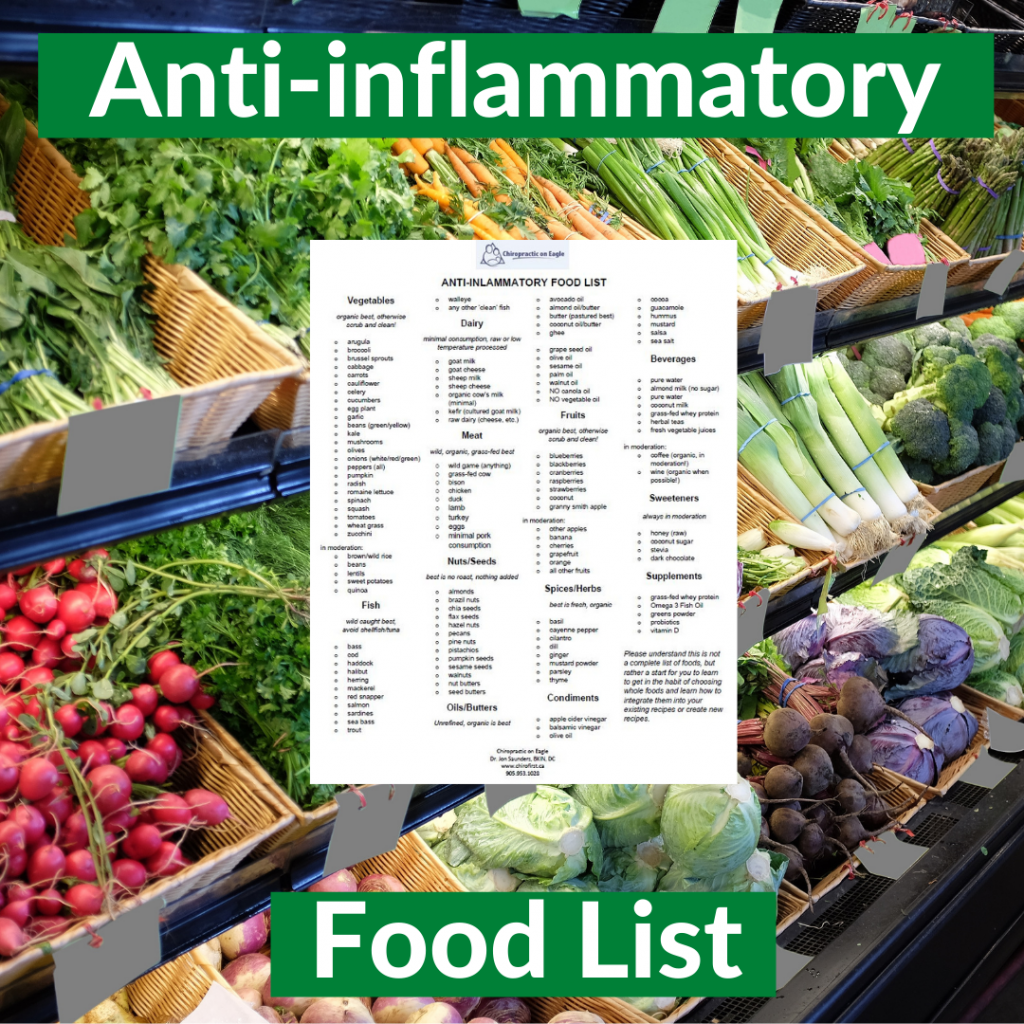
The anti-inflammatory grocery list below is the same list we provide to many of our patients. It is designed to help you gradually replace more processed foods with whole-food alternatives that may help support healthy inflammation levels.
Don’t become overwhelmed by this list.
Instead of trying to change everything at once, start by choosing one or two foods that are not currently part of your regular diet. Add them during your next grocery trip and gradually build from there.
Small, consistent changes are often easier to maintain and can produce meaningful improvements over time. Many people find that as they improve their nutrition, they experience better energy levels, improved weight management, and greater overall well-being.
Table of Contents
- Vegetables
- Fish
- Dairy
- Meat
- Nuts & Seeds
- Oils & Healthy Fats
- Fruits
- Herbs & Spices
- Supplements
- Foods to Limit
- Frequently Asked Questions
Vegetables
organic best, otherwise scrub and clean!
- arugula
- broccoli
- brussel sprouts
- cabbage
- carrots
- cauliflower
- celery
- cucumbers
- egg plant
- garlic
- beans (green/yellow)
- kale
- mushrooms
- olives
- onions (white/red/green)
- peppers (all)
- pumpkin
- radish
- romaine lettuce
- spinach
- squash
- tomatoes
- wheat grass
- zucchini
in moderation:
- brown/wild rice
- beans
- lentils
- sweet potatoes
- quinoa
Fish
wild caught best, avoid shellfish/tuna
- bass
- cod
- haddock
- halibut
- herring
- mackerel
- red snapper
- salmon
- sardines
- sea bass
- trout
- walleye
- any other ‘clean’ fish
Dairy
minimal consumption, raw or low temperature processed
- goat milk
- goat cheese
- sheep milk
- sheep cheese
- organic cow’s milk (minimal)
- kefir (cultured goat milk)
- raw dairy (cheese, etc.)
Meat
wild, organic, grass-fed best
- wild game (anything)
- grass-fed cow
- bison
- chicken
- duck
- lamb
- turkey
- eggs – *my favourite*
- minimal pork consumption
Nuts/Seeds
best is no roast, nothing added
- almonds
- brazil nuts
- chia seeds
- flax seeds
- hazel nuts
- pecans
- pine nuts
- pistachios
- pumpkin seeds
- sesame seeds
- walnuts
- nut butters
- seed butters
Oils/Butters
Unrefined, organic is best
- avocado oil
- almond oil/butter
- butter (pastured best)
- coconut oil/butter
- ghee
- grape seed oil
- olive oil
- sesame oil
- palm oil
- walnut oil
- NO canola oil
- NO vegetable oil
Fruits
organic best, otherwise scrub and clean!
- blueberries
- blackberries
- cranberries
- raspberries
- strawberries
- coconut
- granny smith apple
in moderation:
- other apples
- banana
- cherries
- grapefruit
- orange
- all other fruits
Spices/Herbs
best is fresh, organic
- basil
- cayenne pepper
- cilantro
- dill
- ginger
- mustard powder
- parsley
- thyme
Condiments
- apple cider vinegar
- balsamic vinegar
- olive oil
- cocoa
- guacamole
- hummus
- mustard
- salsa
- sea salt
Beverages
- pure water
- almond milk (no sugar)
- pure water
- coconut milk
- grass-fed whey protein
- herbal teas
- fresh vegetable juices
in moderation:
- coffee (organic, in moderation!)
- wine (organic when possible!)
Sweeteners
always in moderation
- honey (raw)
- coconut sugar
- stevia
- dark chocolate
Supplements
- grass-fed whey protein
- Omega 3 Fish Oil
- greens powder
- probiotics
- vitamin D
Foods That May Increase Inflammation
While every person responds differently to food, some foods are commonly associated with increased inflammation when consumed regularly and in excess.
Examples include:
• Highly processed foods
• Sugary beverages
• Deep-fried foods
• Refined carbohydrates
• Processed meats
• Excessive alcohol
• Foods high in added sugars
The goal is not perfection. Instead, focus on increasing whole foods while gradually reducing heavily processed options.
Anti-Inflammatory Foods and Pain
Many patients ask whether changing their diet can help conditions such as:
• Sciatica
• Arthritis
• Neck pain
• Low back pain
• Spinal stenosis
• Chronic pain
Diet alone will not fix these conditions. However, improving nutrition may help support healthy inflammation levels and complement other healthy habits such as exercise, mobility work, good sleep, and appropriate treatment.
You may also find these resources helpful:
👉Degenerative Disc Disease & Spinal Osteoarthritis
Frequently Asked Questions
You do not need a perfect diet to improve your health.
Focus on eating more whole foods, making gradual improvements, and building sustainable habits over time. Small changes made consistently often lead to the biggest long-term results.
If you are dealing with sciatica, neck pain, headaches, arthritis, dizziness, or other musculoskeletal conditions, nutrition may be one piece of a larger plan to help support your overall health and recovery.
Chiropractic on Eagle
2:30 – 5:30 PM
2:30 – 6:00 PMTuesday 7:30 – 10:45 AM
2:30 – 5:30 PMWednesday 2:30 – 6:00 PMThursday 7:30 – 10:45 AM
2:30 – 5:30 PMFriday ClosedSaturday ClosedSunday Closed